

 BOOK NOW

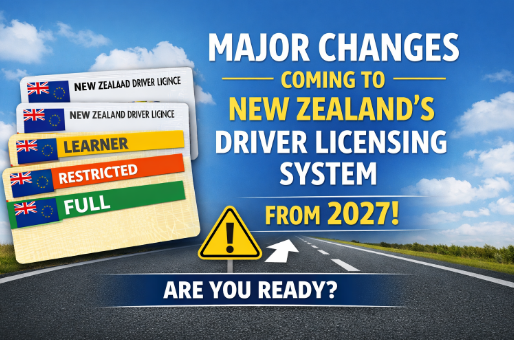
Major Changes Coming to New Zealand’s Driver Licensing System (From 2027)
March 11, 2026 at 1:51 PM
The New Zealand Government has announced significant updates to the Graduated Driver Licensing System (GDLS). These changes are designed to make it easier, cheaper, and more practical for people to obtain a full driver licence, while still ensuring drivers gain the experience needed to drive safely.
The new system will take effect from 25 January 2027, so for now the current licensing process remains unchanged.
Below is a summary of the key changes and what they mean for learner drivers.
Why the Licensing System Is Changing
The Government has stated that the current system is expensive and inefficient, with many New Zealanders struggling to progress through the licensing stages.
The updated system aims to:
- Reduce the cost of getting a licence
- Improve access to driver training
- Focus more on real-world driving experience
- Ensure drivers develop safe driving skills before driving independently
These are the first major changes to the licensing system since 2011.
Key Changes to the Learner Licence Stage
One of the biggest changes affects how long drivers must stay on their learner licence.
Longer learner period for drivers under 25
Under the new rules:
- Drivers under 25 must hold a learner licence for 12 months (currently 6 months).
- However, this can be reduced back to 6 months if the learner:
- Completes an approved practical driving course, or
- Logs supervised driving hours (likely up to around 60 hours).
Drivers aged 25 or older will still only need to hold their learner licence for 6 months before progressing.
The goal is to encourage learner drivers to gain more supervised driving experience before driving solo.
Changes to the Restricted Licence Stage
There are also several updates to the restricted licence process.
Hazard perception test added
The hazard perception test will be included as part of the restricted licence practical test instead of the full licence stage.
Restricted licence periods
Under the new system:
- Drivers under 25 must hold a restricted licence for 12 months.
- Drivers 25 and over must hold it for 6 months.
If a restricted driver receives demerit points, they may have to stay on their restricted licence for an additional six months.
This encourages safer driving behaviour during the restricted stage.
No Practical Test for a Full Licence
Perhaps the most significant change is that drivers will no longer need to take a practical driving test to obtain their full licence.
Instead, once drivers have held their restricted licence long enough and maintained a safe driving record, they can apply for their full licence without another test.
This change:
- Reduces costs for drivers
- Removes a common barrier to progressing through the licensing system
Lower Licence Fees
Another major benefit of the changes is reduced licence costs.
For example:
- The restricted licence application fee will reduce to $160.50.
- The full licence application fee will drop dramatically to $25.90.
Overall, the Government estimates drivers will save around $80 during the licensing process.
Zero Alcohol Limit for Learner and Restricted Drivers
A zero alcohol limit will apply to all learner and restricted drivers, regardless of age.
Previously, the zero-alcohol rule only applied to drivers under 20. The new rule aims to improve safety among less experienced drivers.
Stronger Oversight of Driving Course Providers
NZTA will also introduce stronger regulation of approved driver training providers.
Under the new system:
- Course providers must pass fit and proper checks
- Providers will need to reapply for approval every five years
- NZTA will have the power to suspend or revoke approvals if needed
This is designed to ensure driving courses deliver high-quality training.
What Happens If You Already Have a Licence?
If you already have a learner or restricted licence when the new rules begin in January 2027, the updated system will apply to you as well.
Until then, you must still follow the current driver licensing process.
What This Means for Learner Drivers
Overall, the new system shifts the focus from testing to experience.
Instead of relying heavily on multiple tests, the updated GDLS aims to ensure drivers gain more supervised practice and real-world driving experience before progressing to the next stage.
For learner drivers, this means:
- More time practising before driving solo
- Fewer expensive tests
- A clearer pathway to getting a full licence
Learn to Drive the Right Way
Whether you’re preparing for your learner licence, restricted test, or simply want to become a safer driver, professional instruction can make a huge difference.
At A1 Driving School, our experienced instructors help learner drivers develop the skills and confidence needed to succeed on New Zealand roads.
If you’re ready to start learning, get in touch with our team today and book your driving lesson.
 SIGN IN/UP